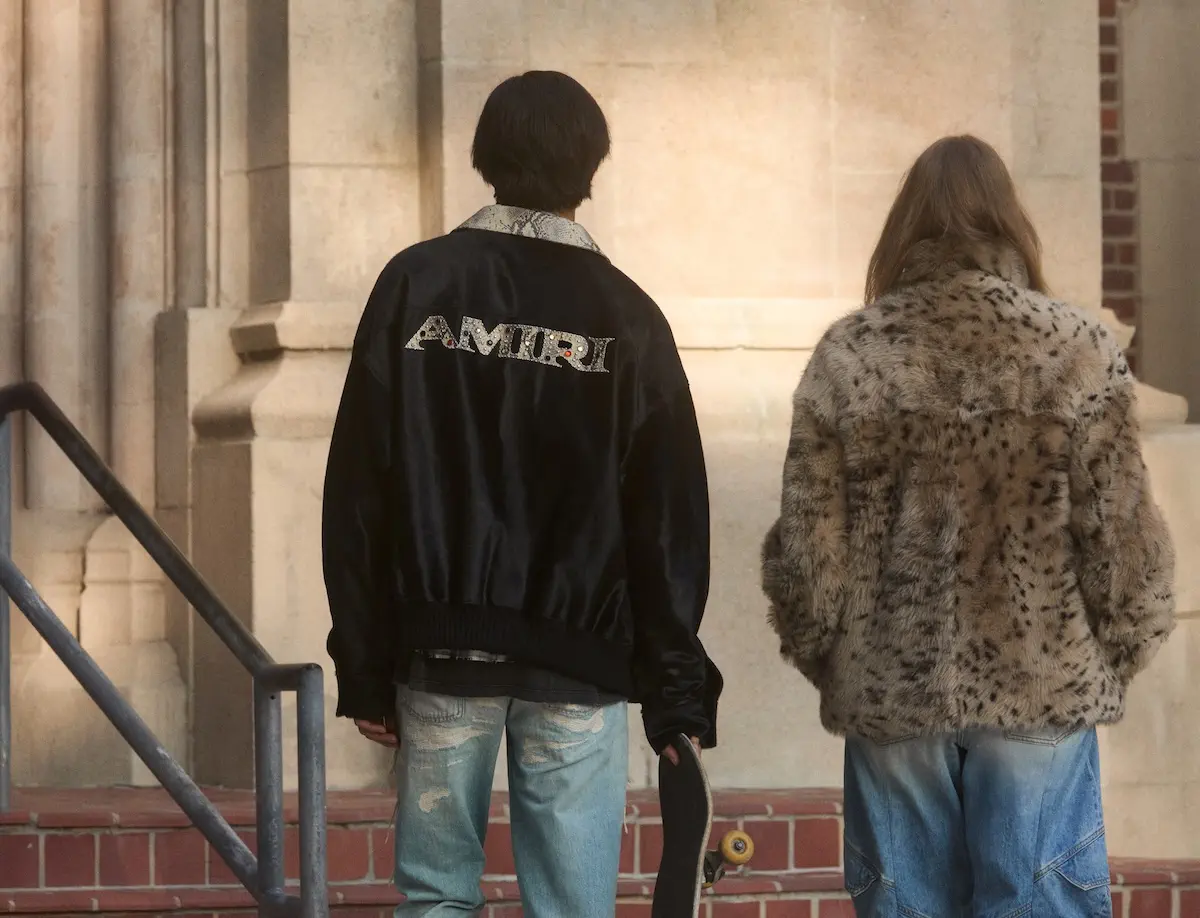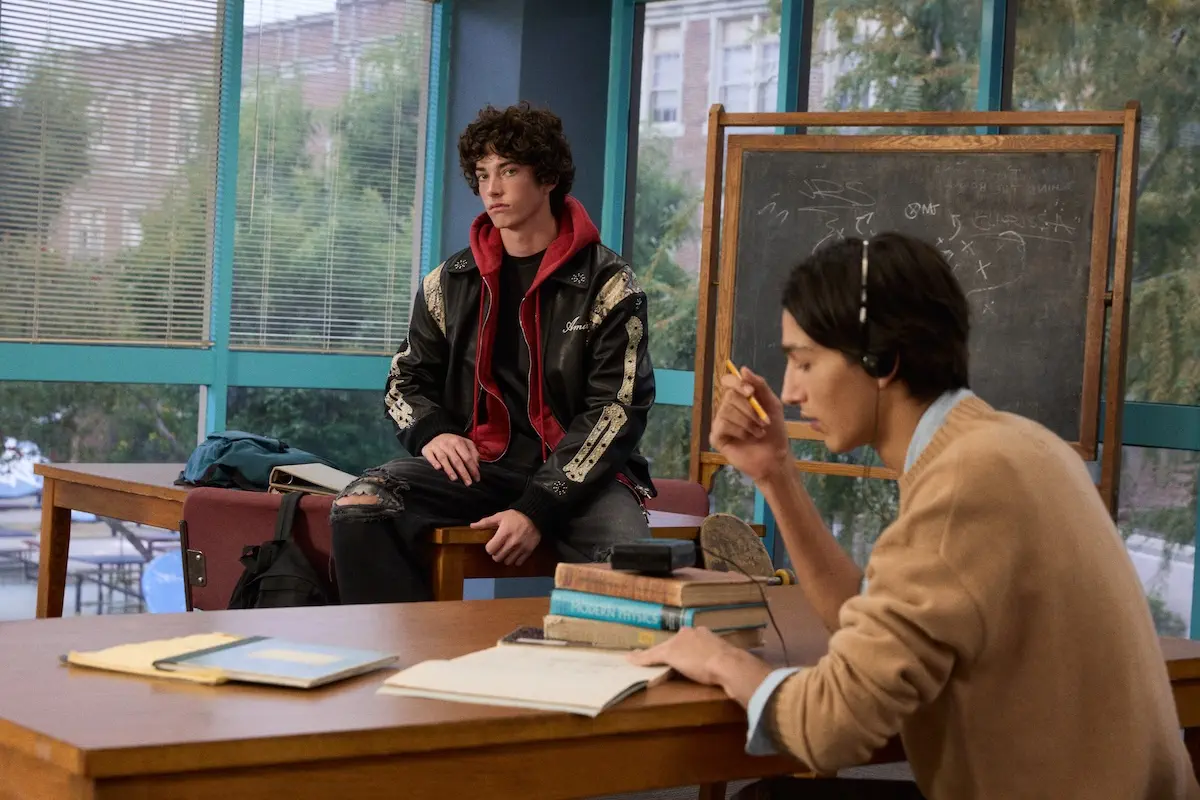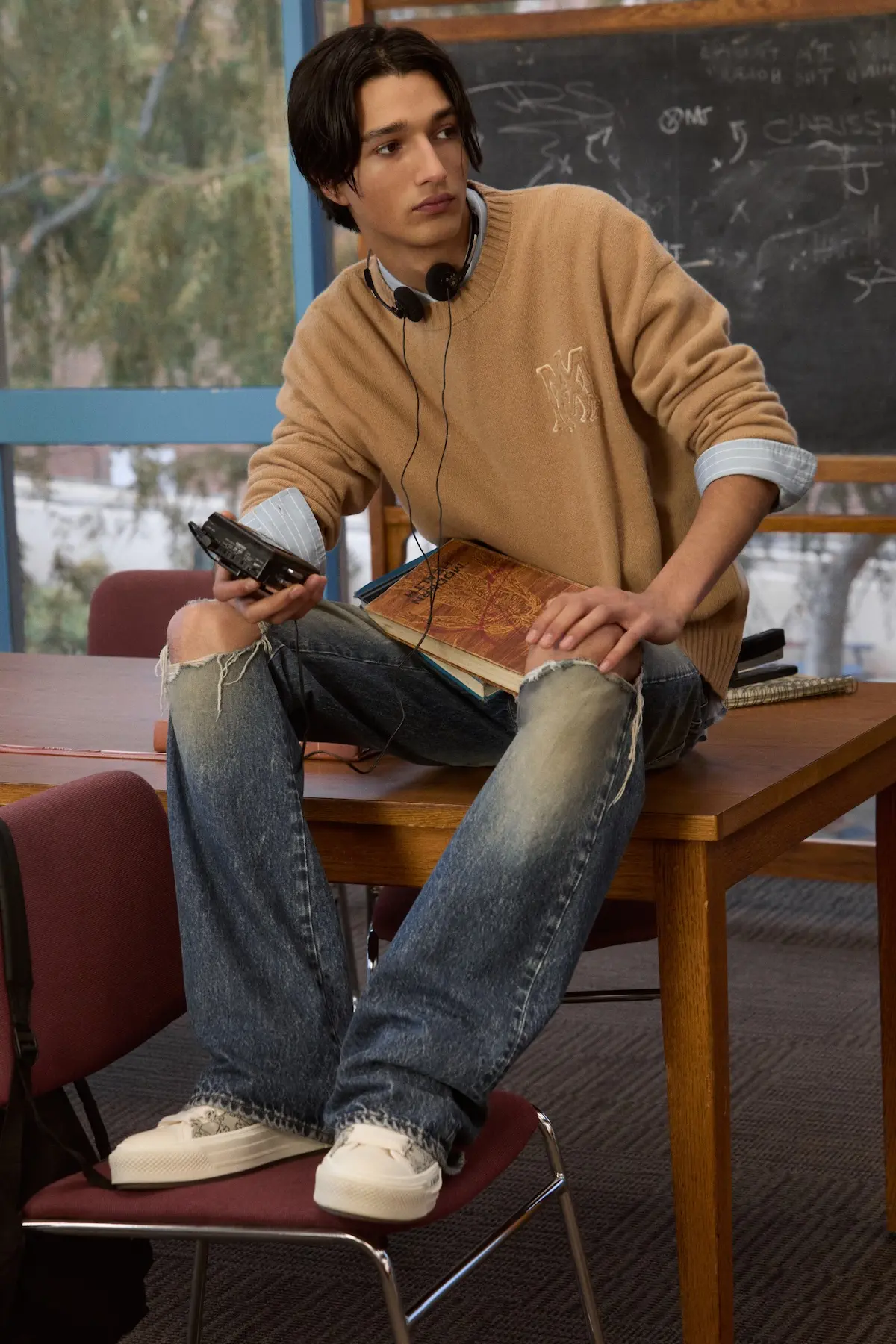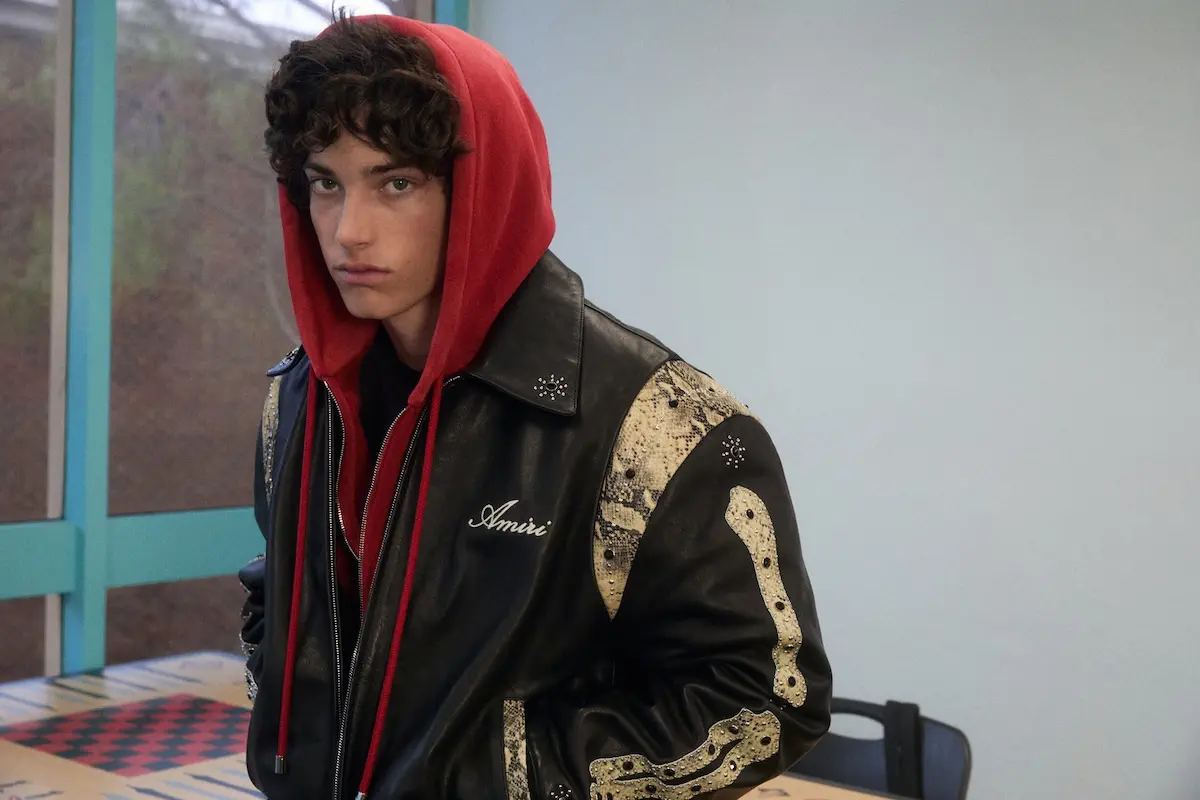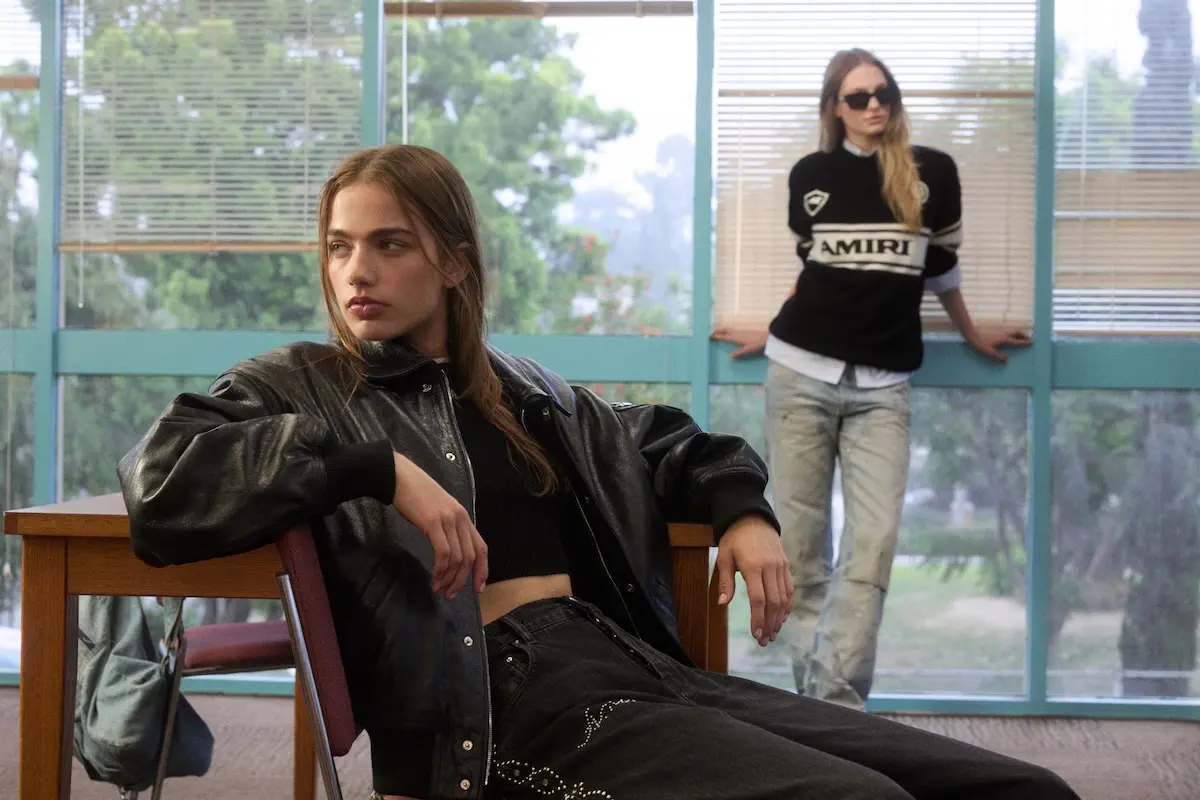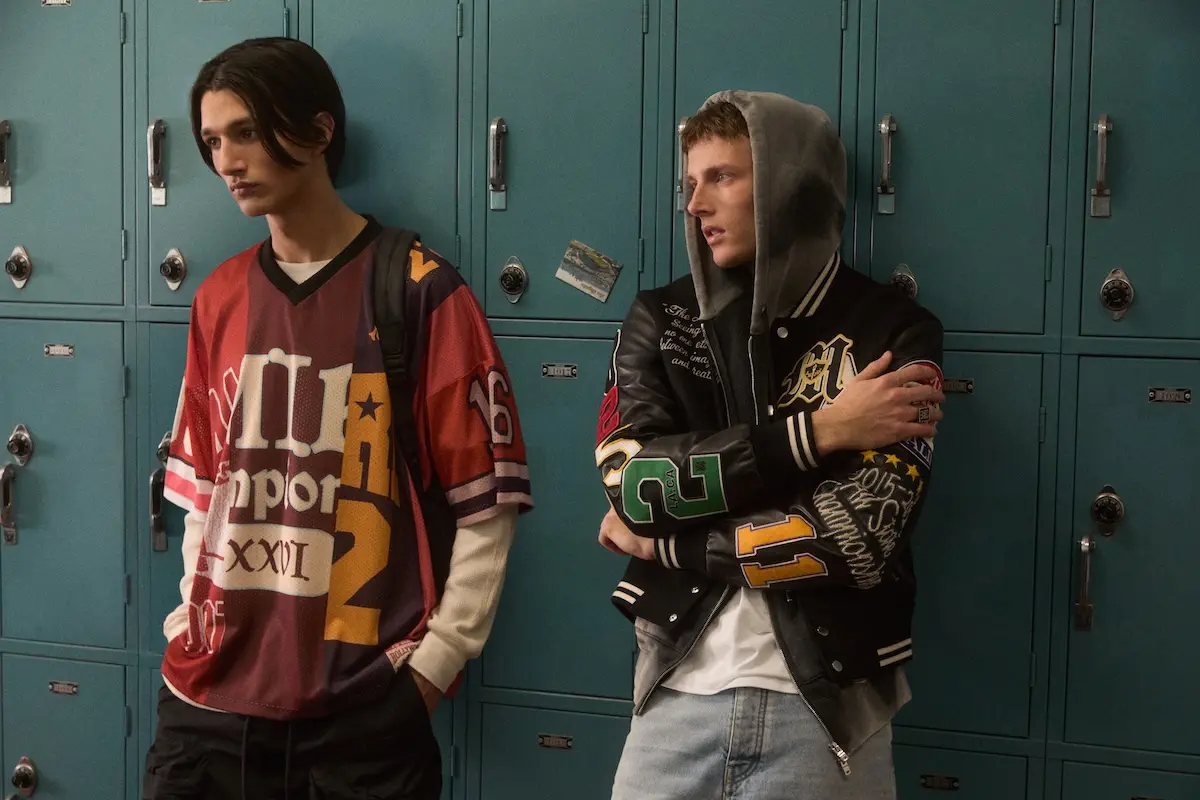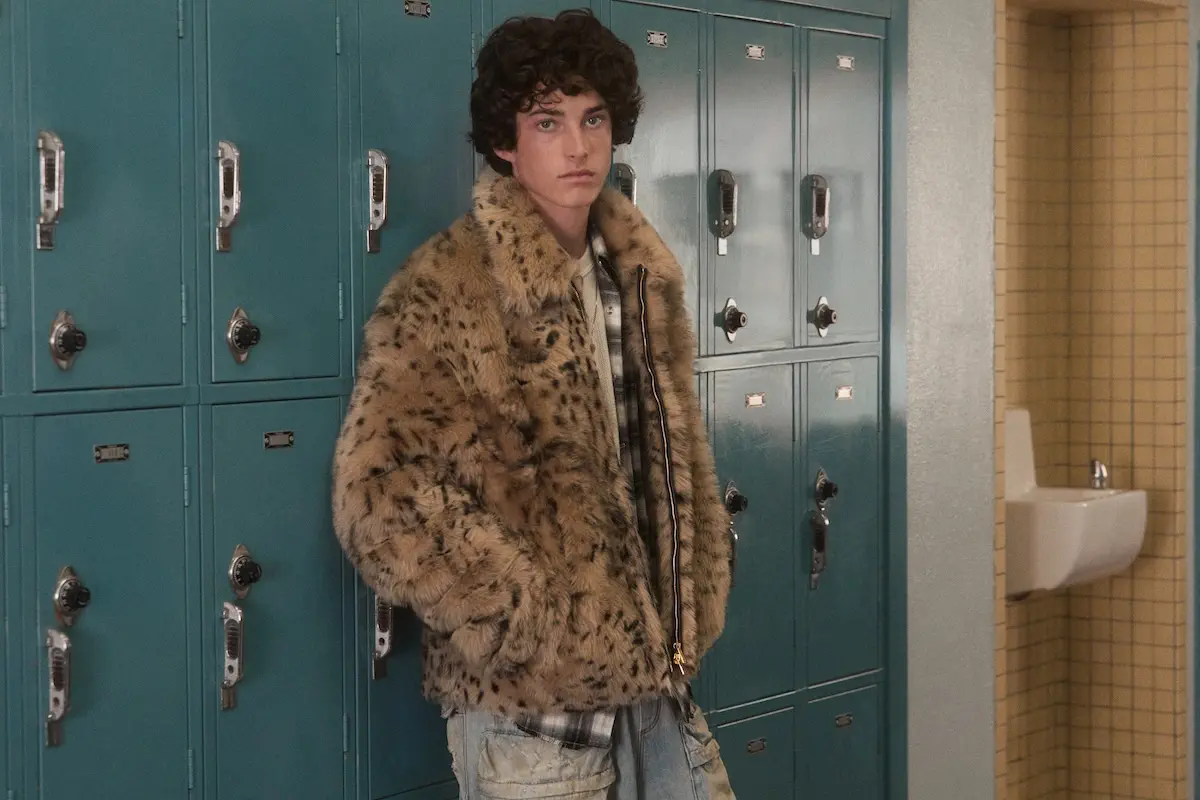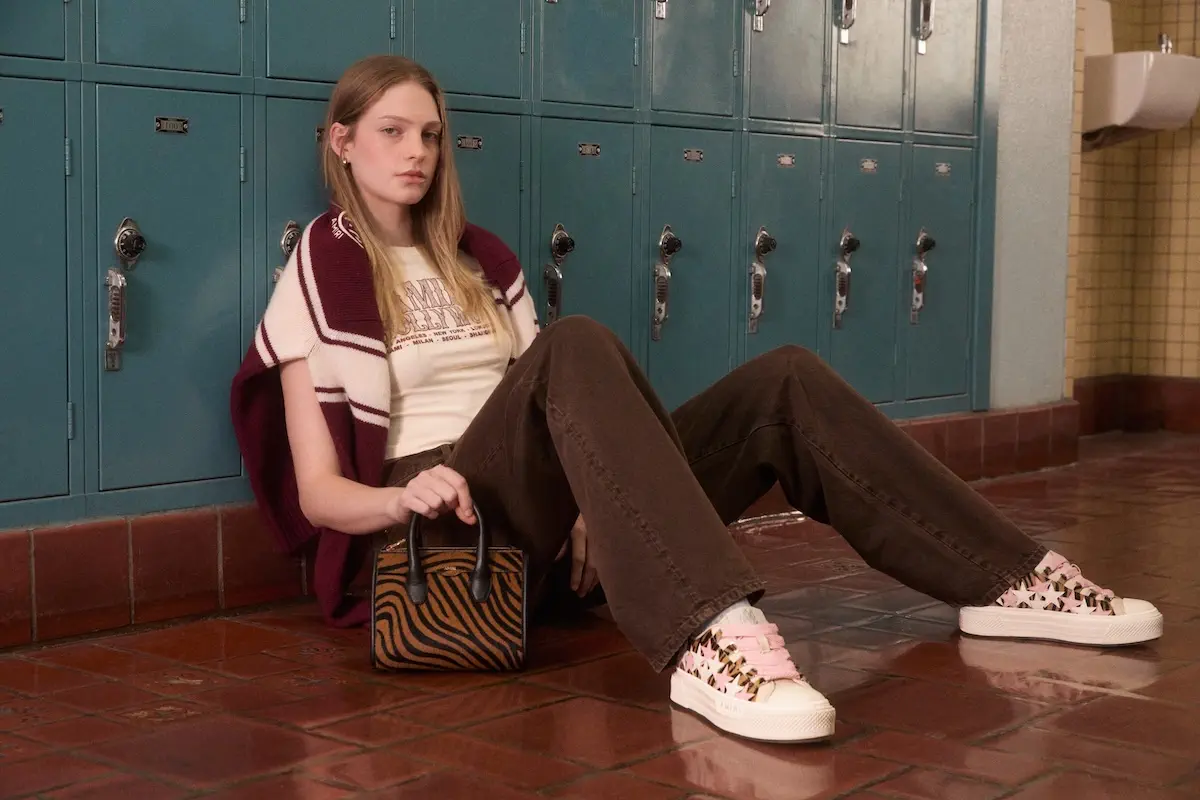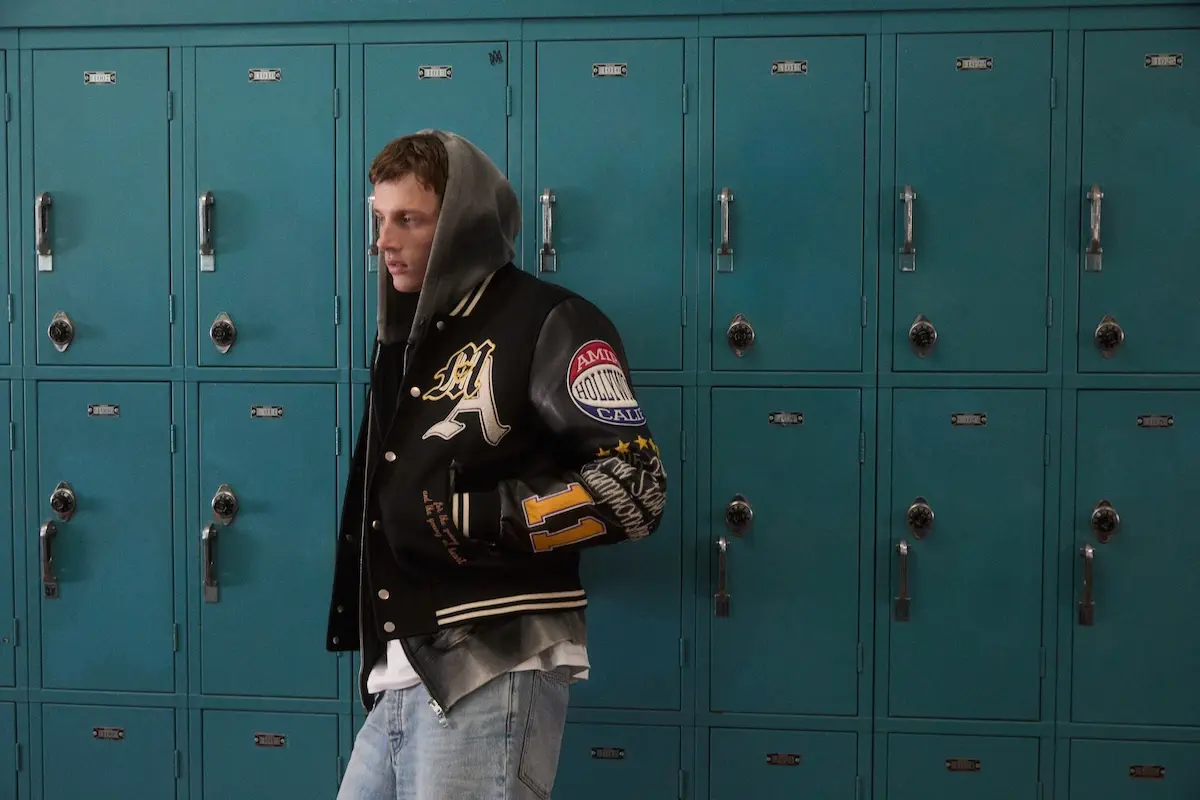


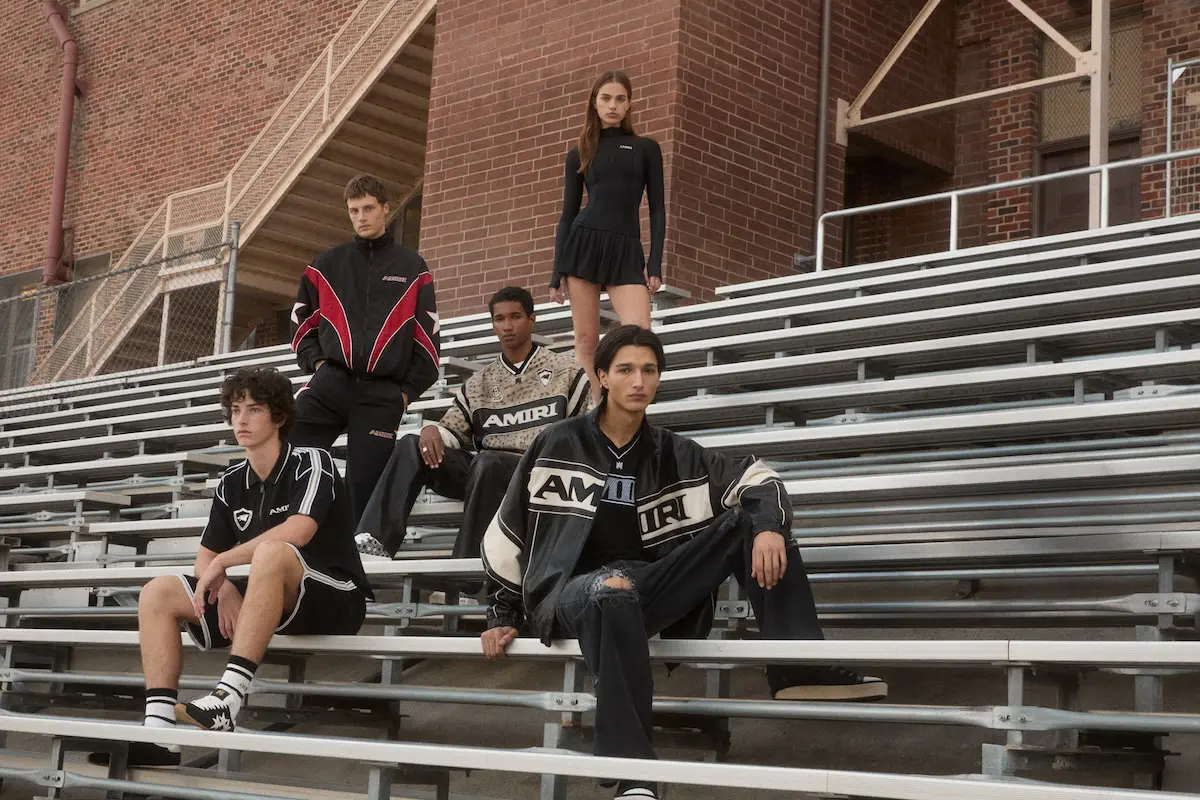
Set in the iconic corridors of John Marshall High School, the AMIRI Resort 2026 (Cruise 2026) campaign reframes modern youth culture through a cinematic lens. The collection fuses luxury streetwear with the emotional resonance of 1980s coming-of-age films, creating a visual narrative where identity, rebellion, and California ease collide.
Mike Amiri turns to John Hughes’s 1985 film The Breakfast Club as a reference point. Not to copy it, but to capture its emotional essence. The idea that, despite their differences, teenagers can find common ground when left alone. No adults. No expectations. Just time. The location feels right. John Marshall High has been featured in decades of films, from Grease to Space Jam. Its walls echo performances and real emotions alike.
The AMIRI Resort 2026 campaign showcases a diverse group of individuals. The rebel. The athlete. The artist. The one who follows rules precisely. They stand together, not forcing harmony. Their clothing speaks before they do. A leather bomber jacket looks like it’s been worn for years. A faux fur coat carries the scent of vintage stores. The knits have the soft drape of constant use.
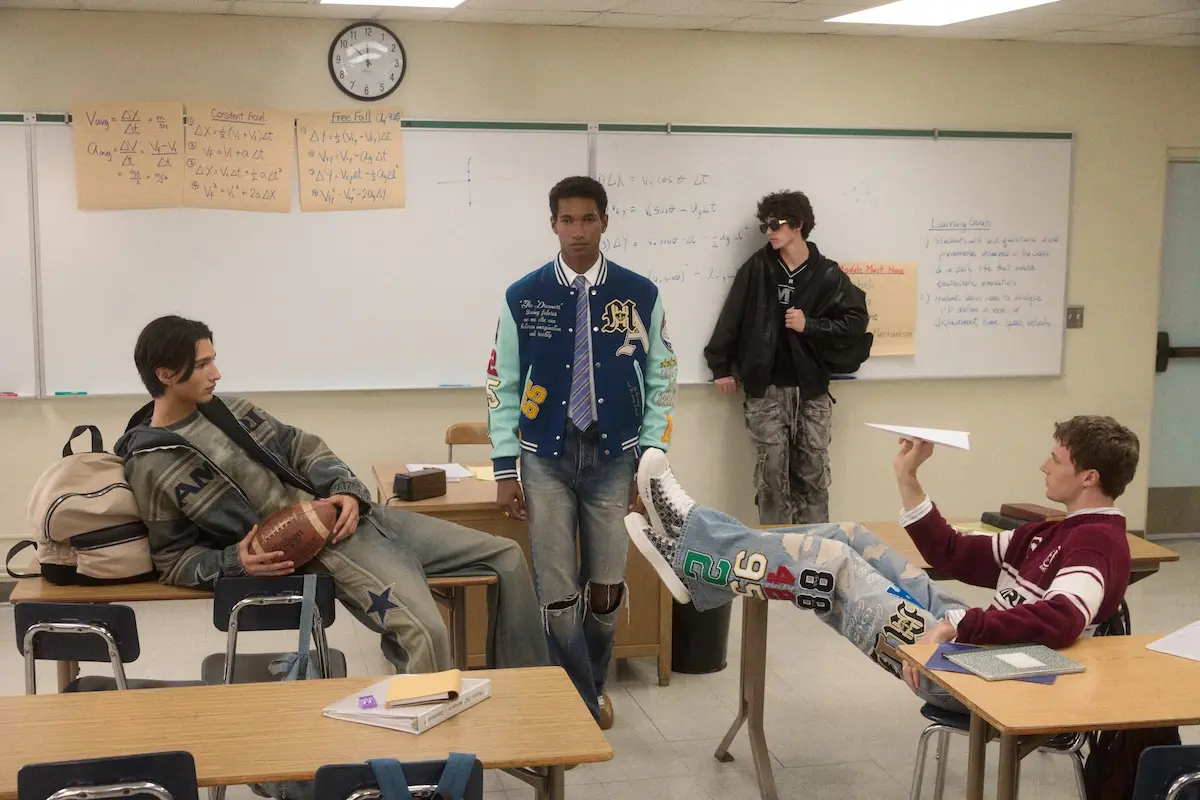
There is no attempt to erase differences. Instead, the collection highlights contrast. A penny loafer sits under a miniskirt, paired with a distressed hoodie. An embroidered letterman jacket, adorned with patches and threadwork, is worn over a loosely knotted tie. These are not costumes. They feel personal and chosen over time, altered by habit.
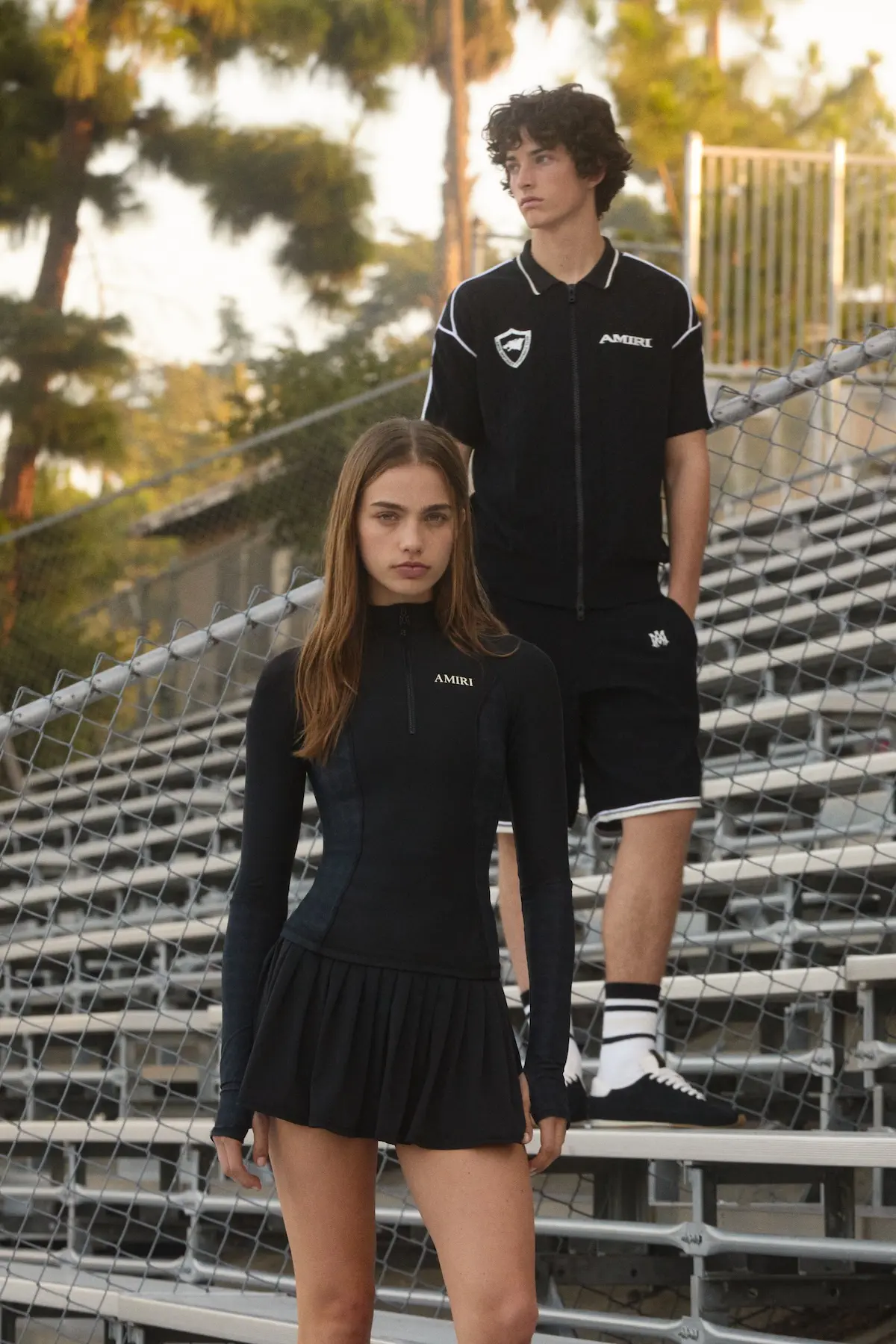
The clothes reflect a fluid way of dressing. One look might suggest sportswear; the next leans into punk; then it shifts toward preppy refinement. This is not about trends. It’s about how young people actually wear things, pulling from different styles and building an image that shifts with their mood and the moment.
Follow all the latest news from Fashionotography on Flipboard, or receive it directly in your inbox with Feeder.
You might also read

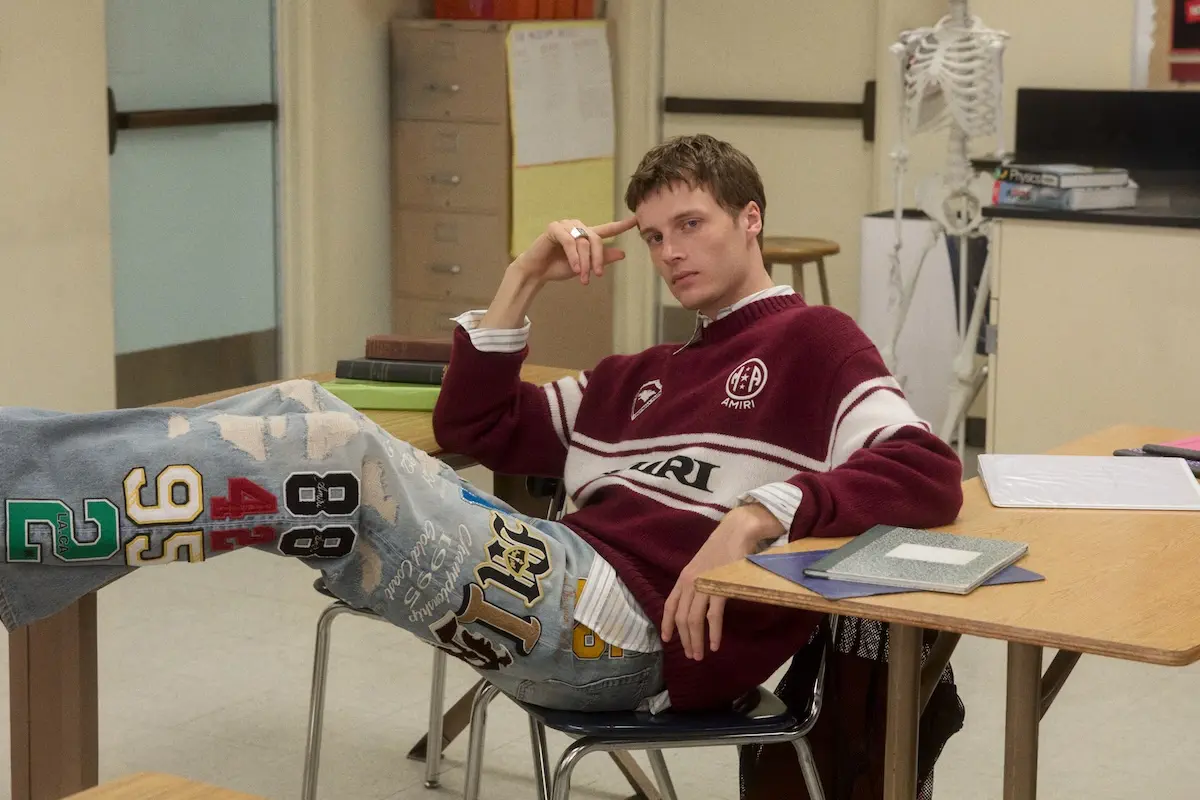
Signature pieces appear with quiet confidence. The Pacific sneaker, the Court, and the Low Top are all grounded and recognizable. They are built for walking city blocks or standing in schoolyards. The Micro MA Bag appears in hand, small yet noticeable. These items serve as anchors in a wardrobe that otherwise drifts between identities.
Denim remains central. There are loose fits, faded washes, and patched knees. Some pairs have varsity-style repairs as if mended by hand after a fall or a fight. They can be worn with sports knits or tucked under layered jackets. Nothing feels forced. Everything suggests use, movement, and life.
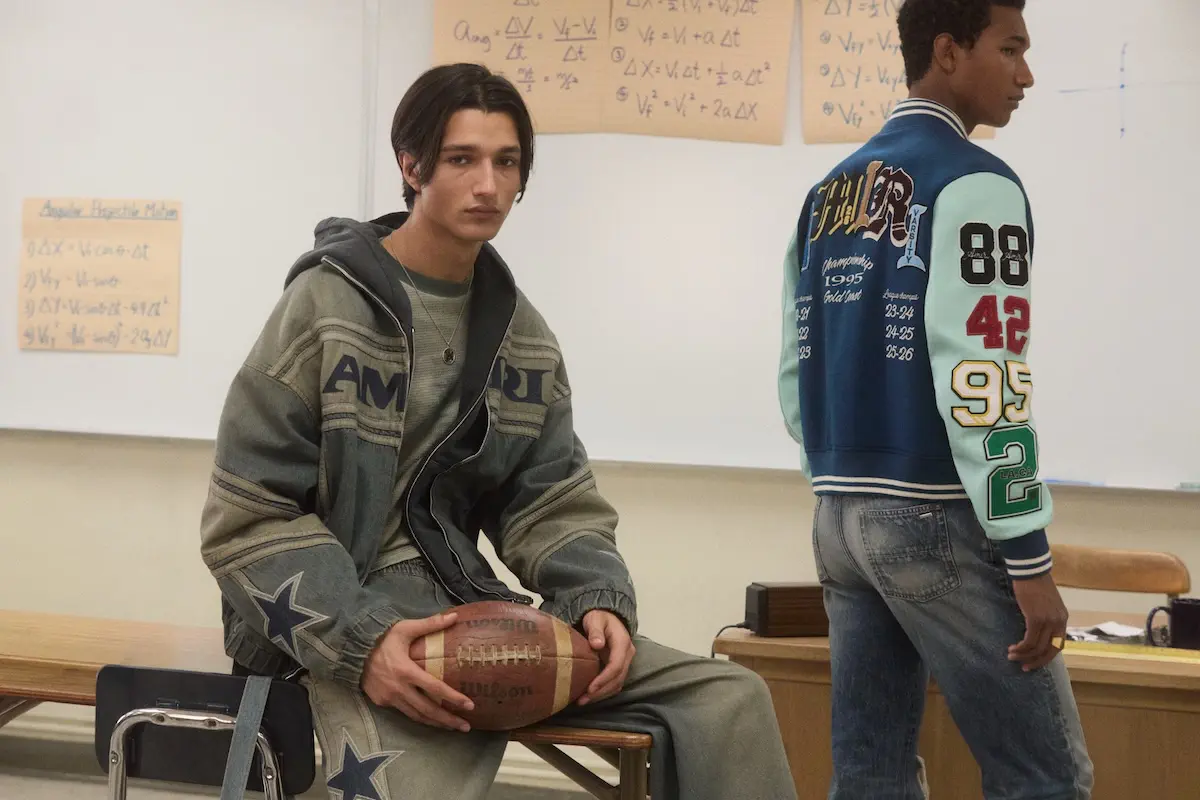
The AMIRI logo appears not as a whisper, but as a statement. It is printed large, like a team name on the back of a jacket, or embroidered like a school crest. This is not subtle branding. It is identification. It’s a signal. In youth culture, symbols matter. A logo can be a flag – a way to express who you are without speaking.
Photographer Hart Leshkina captures this mood through stillness. The images breathe. There is space between subjects. Light falls across faces without drama. There is no urgency, only presence. Michael Vasquez’s precise yet never stiff styling supports this tone.
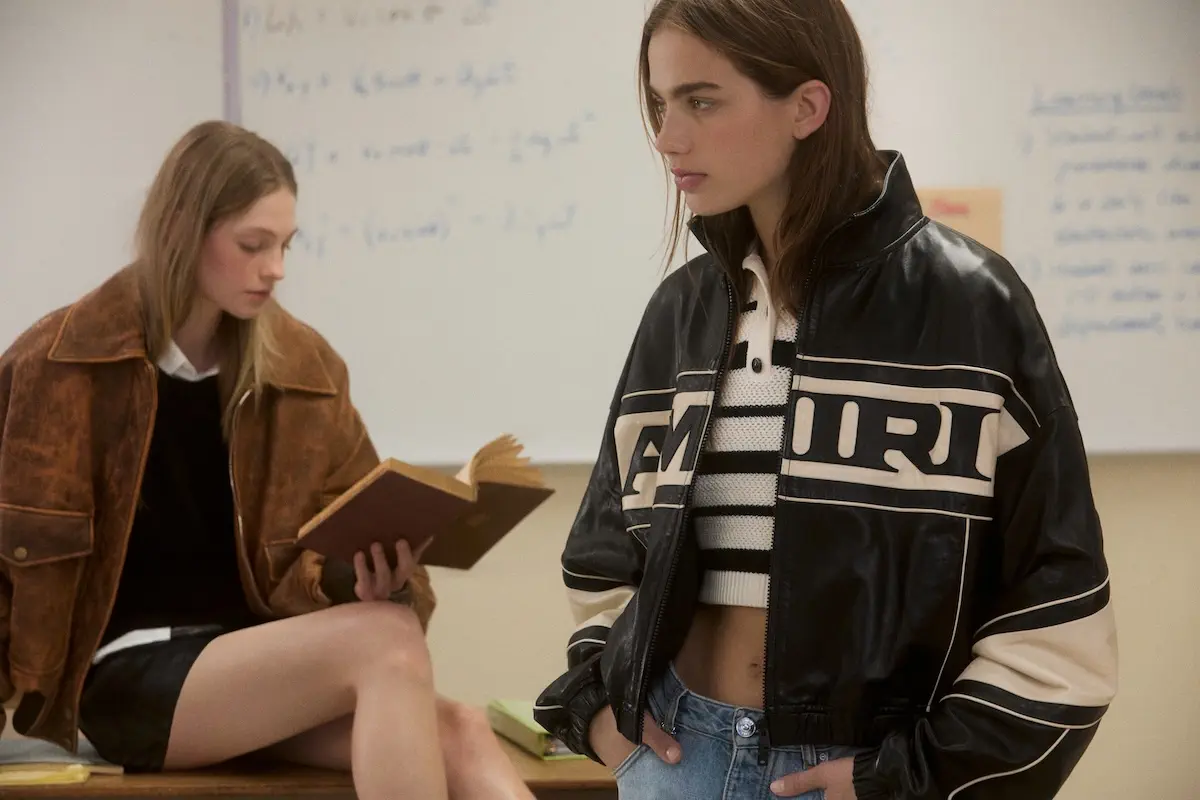
James Rene’s set design makes use of the school’s architecture. Lockers line the halls. Fluorescent lights hum overhead. Classrooms sit empty. These are real spaces, not constructed sets. This authenticity lends weight to the campaign.
Mike Amiri has always drawn from rock, street, and sports culture. Here, he adds another layer: the mythology of American adolescence. Not the glossy version sold in ads, but the raw, uncertain version seen in Hughes’s films. It’s the feeling of being misunderstood yet deeply connected to others who feel the same.
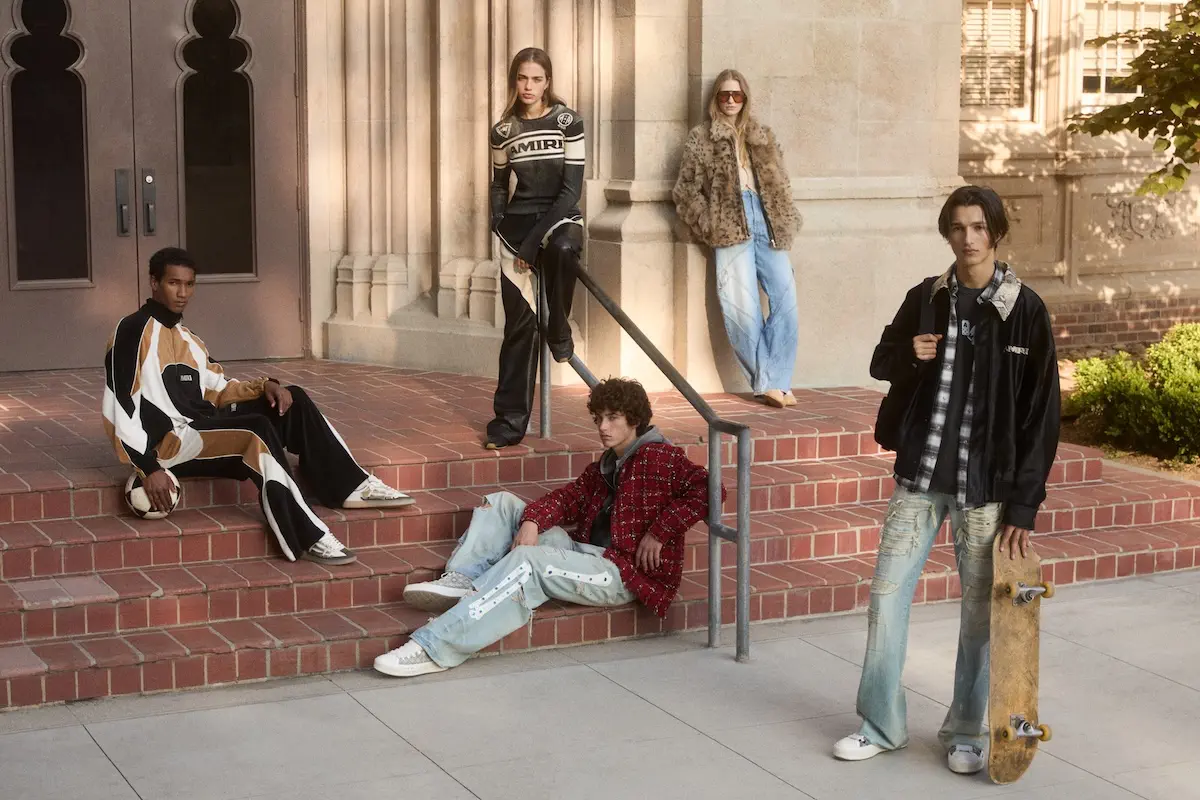
This collection does not chase novelty. Instead, it revisits familiar forms, bombers, hoodies, denim, and sneakers, and renews them through craft and context. The patina on the leather, the precision of the embroidery, and the weight of the fabric speak of care.
The AMIRI Resort 2026 campaign is not loud. It does not need to be. Instead, it stands in a hallway, looks around, and quietly but clearly says: Belonging does not require conformity.