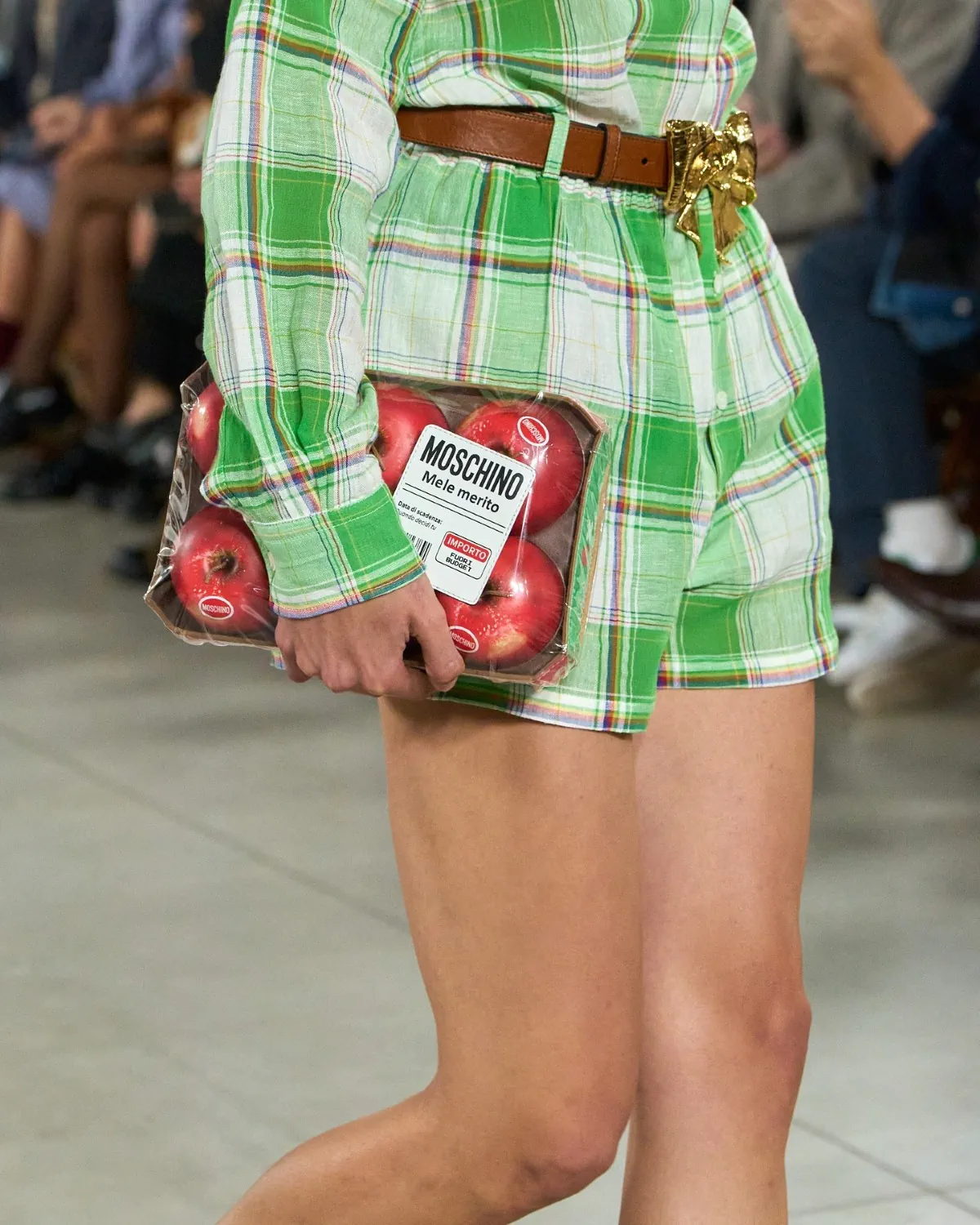

The Moschino Spring/Summer 2026 collection unfolded with the unexpected ease of everyday objects elevated into fashion. Appiolaza, who is now firmly shaping the direction of the house, leaned on Arte Povera as his guide, transforming scarcity into style. The choice felt deliberate. He drew from leftover fabrics, deadstock swatches, and even potato sacks, reminding audiences that value can rise from what is often dismissed.
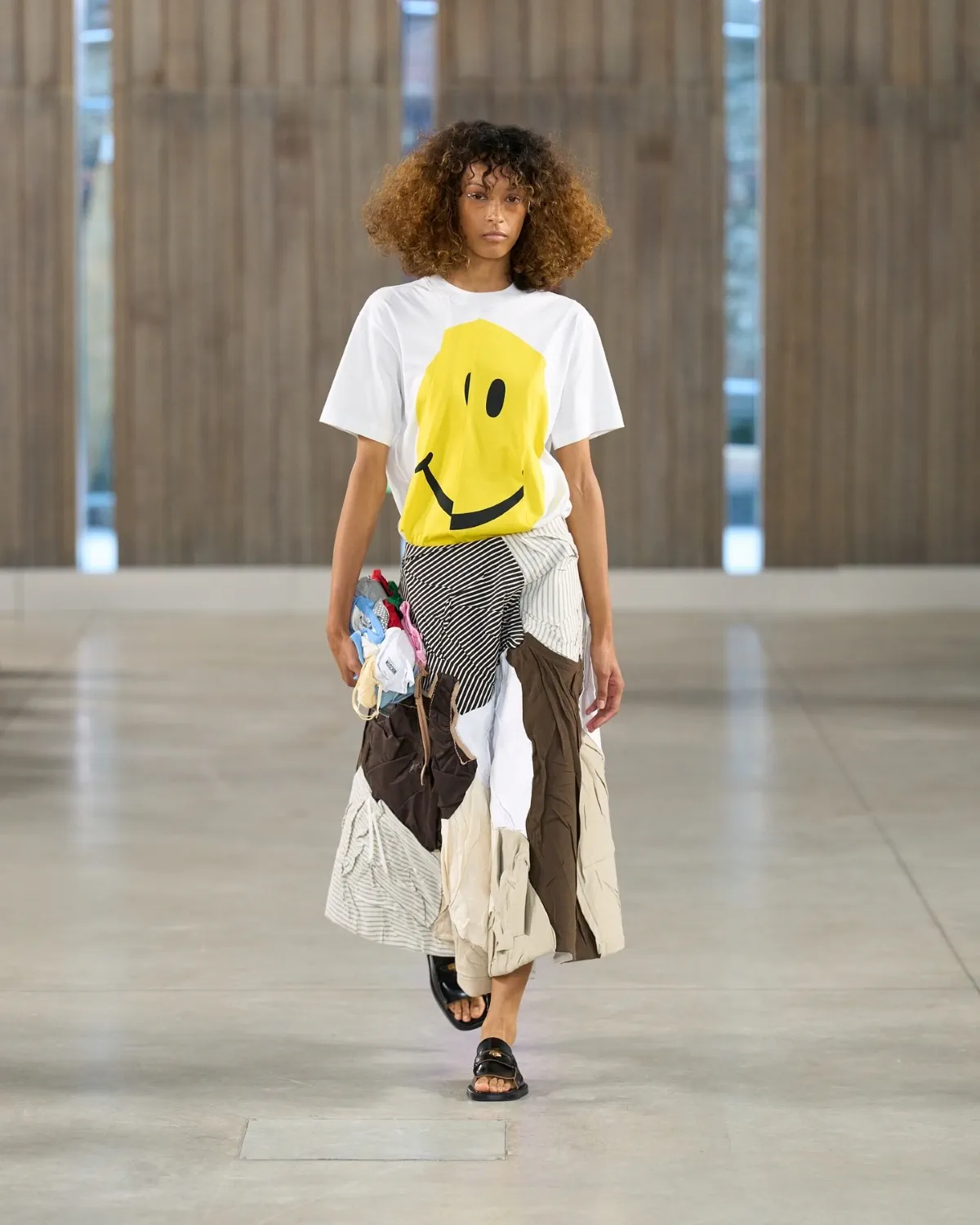
Dresses stitched from compressed cloth, skirts resembling patchwork quilts, and a trench coat wrapped in scraps showcased the beauty of reuse. These raw yet polished garments recalled Michelangelo Pistoletto’s “Venus of the Rags,” echoing the artistic roots that inspired them. Though the materials were not ornamental, their construction brought sharp clarity to the collection.
Appiolaza reintroduced Franco Moschino’s witty codes with a lighter touch. The white “Niente” T-shirt, originally designed by the founder, reappeared as a manifesto for the season. Archive newspaper prints reappeared with a more optimistic tone. Trompe l’œil details and the familiar Smiley returned, signaling continuity with the brand’s past while looking forward.
Follow all the latest news from Fashionotography on Flipboard, or receive it directly in your inbox with Feeder.
You might also read

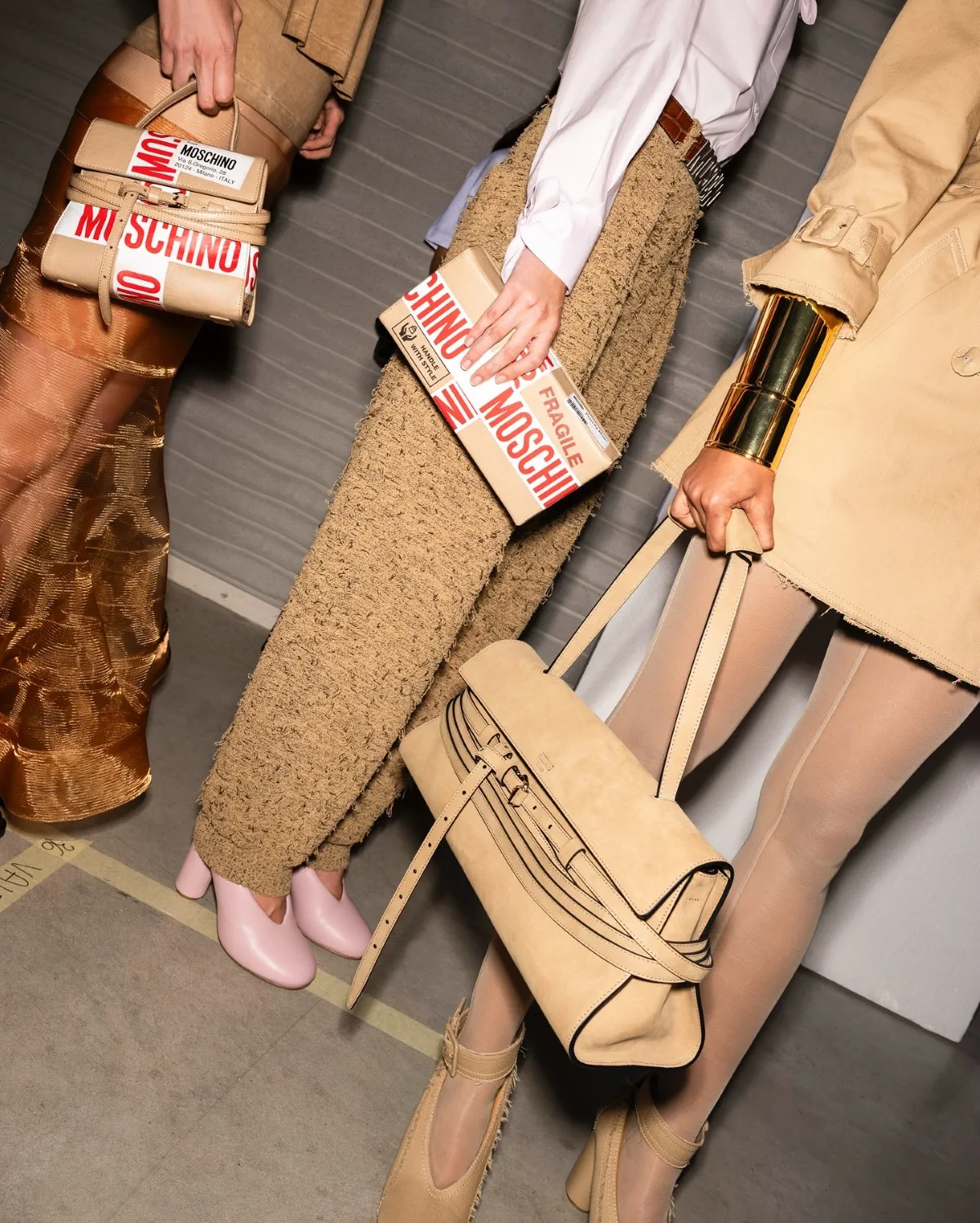
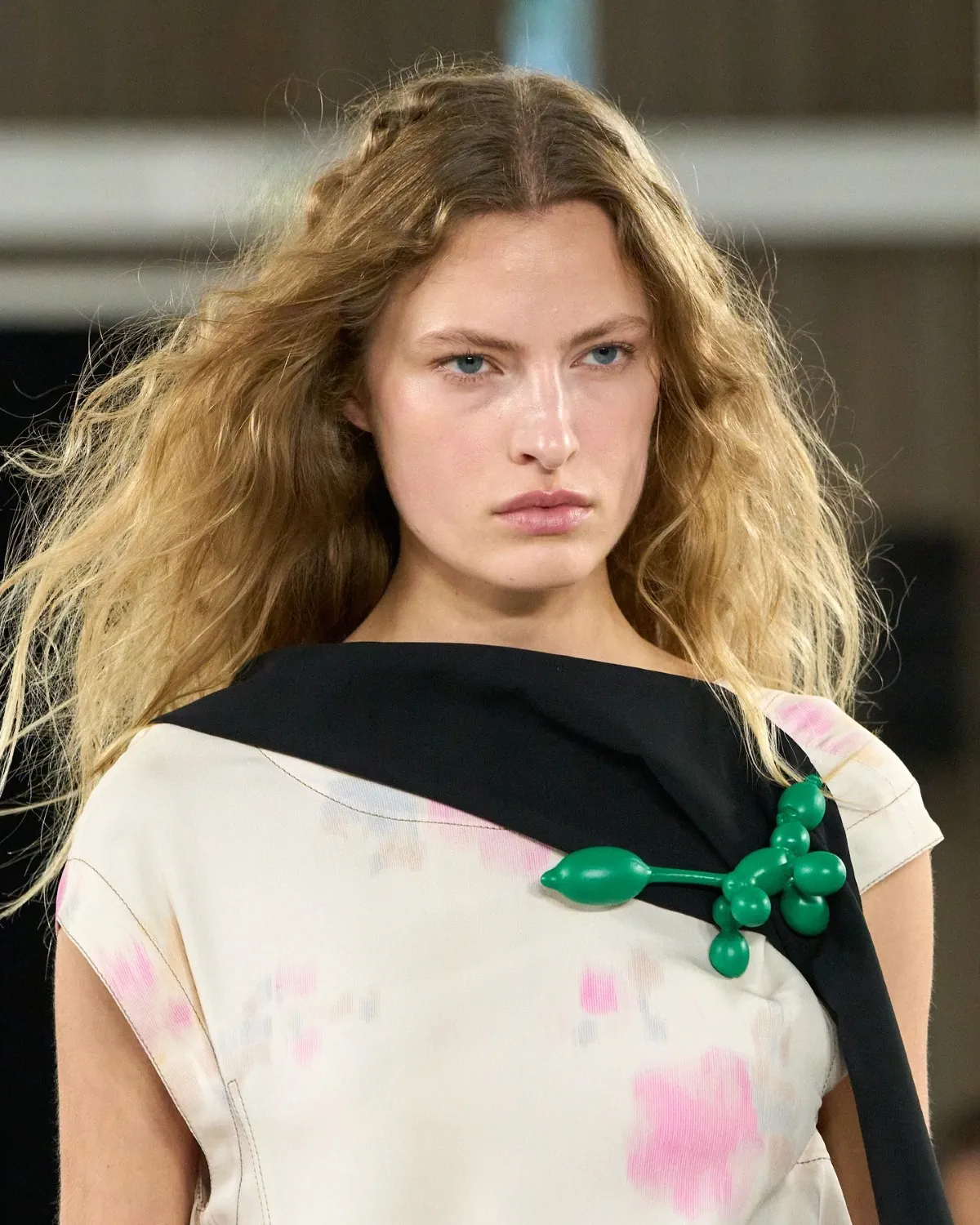
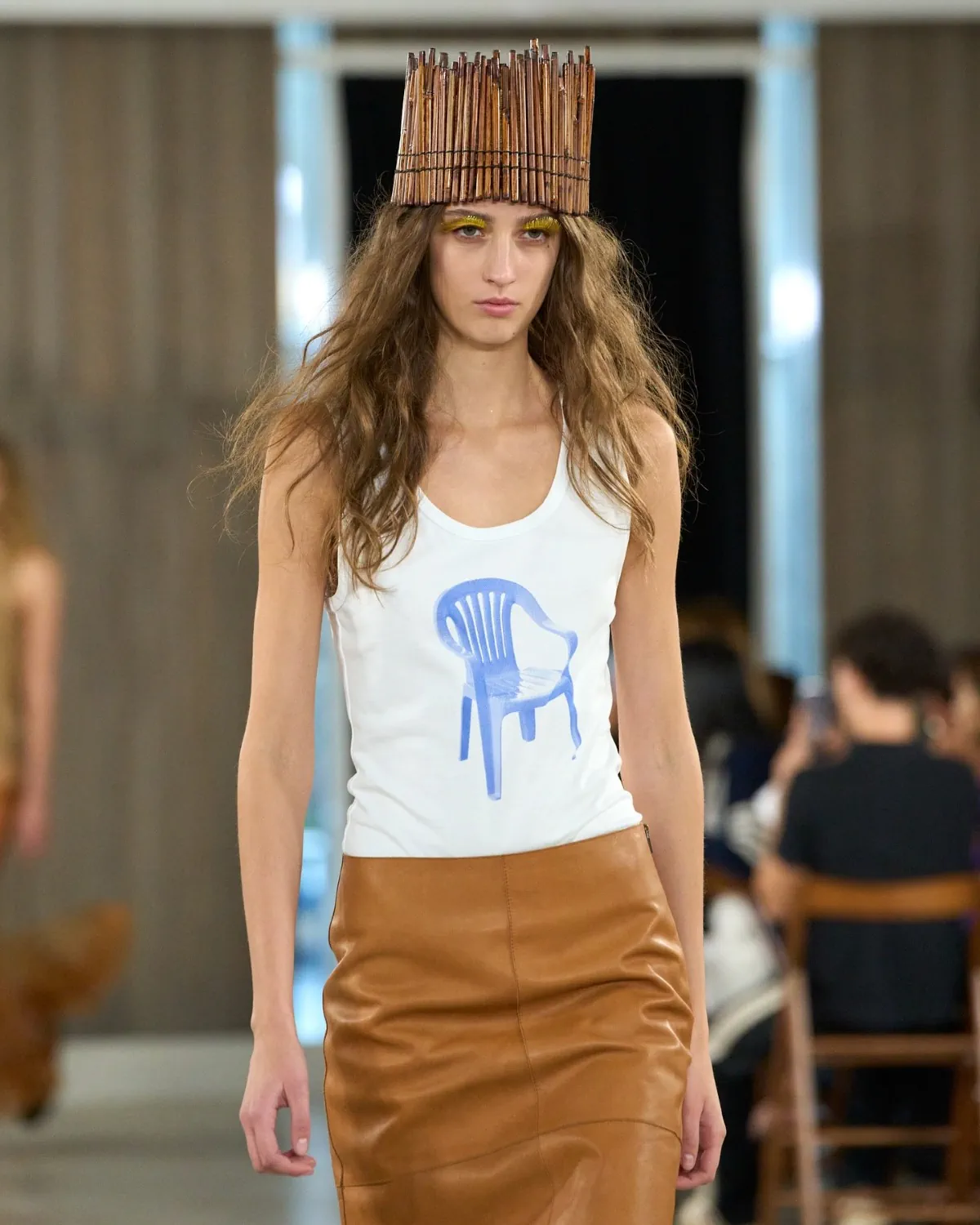
Accessories carried the label’s humor at full speed. A toilet brush reimagined as footwear, balloon dogs transformed into jewelry, and handbags resembling saucepans or sand buckets brought Moschino’s irreverence into daily life. What could have been playful gimmicks instead looked like astute observations on consumer culture.
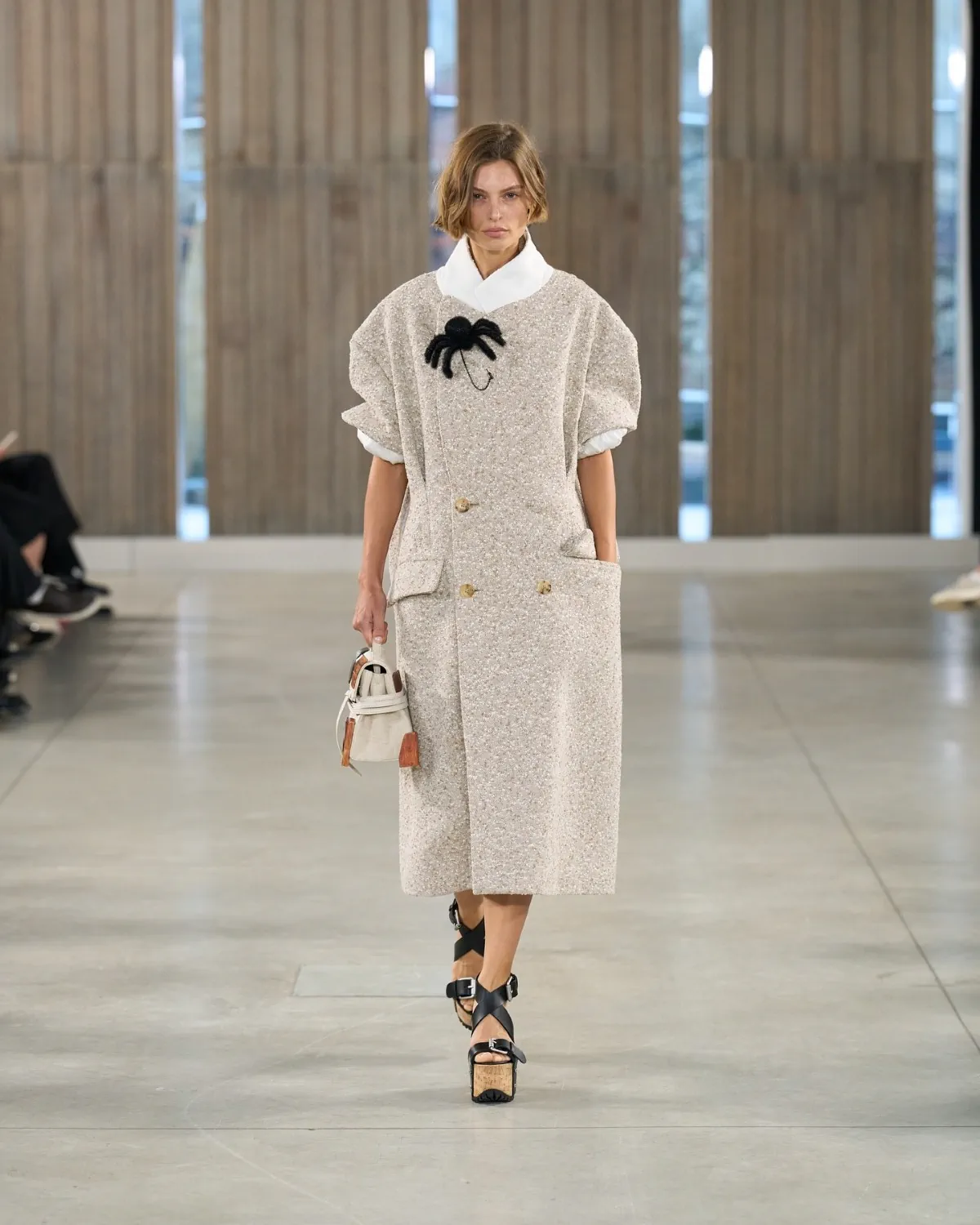
Floral prints and appliqués softened the edges of this rigor, appearing on dresses, tailored pieces, and knitwear. Raffia fringes and knit ruffles added texture and movement to the collection, giving it a handmade spirit without losing its sophistication.
The closing look, a T-shirt dress stamped with a child’s face and the word “Stop,” struck a somber note. It served as a reminder of our responsibility toward future generations, aligning Appiolaza’s Arte Povera reference with environmental urgency. Without shouting slogans from the runway, the collection hinted at the deeper stakes beneath its humor.